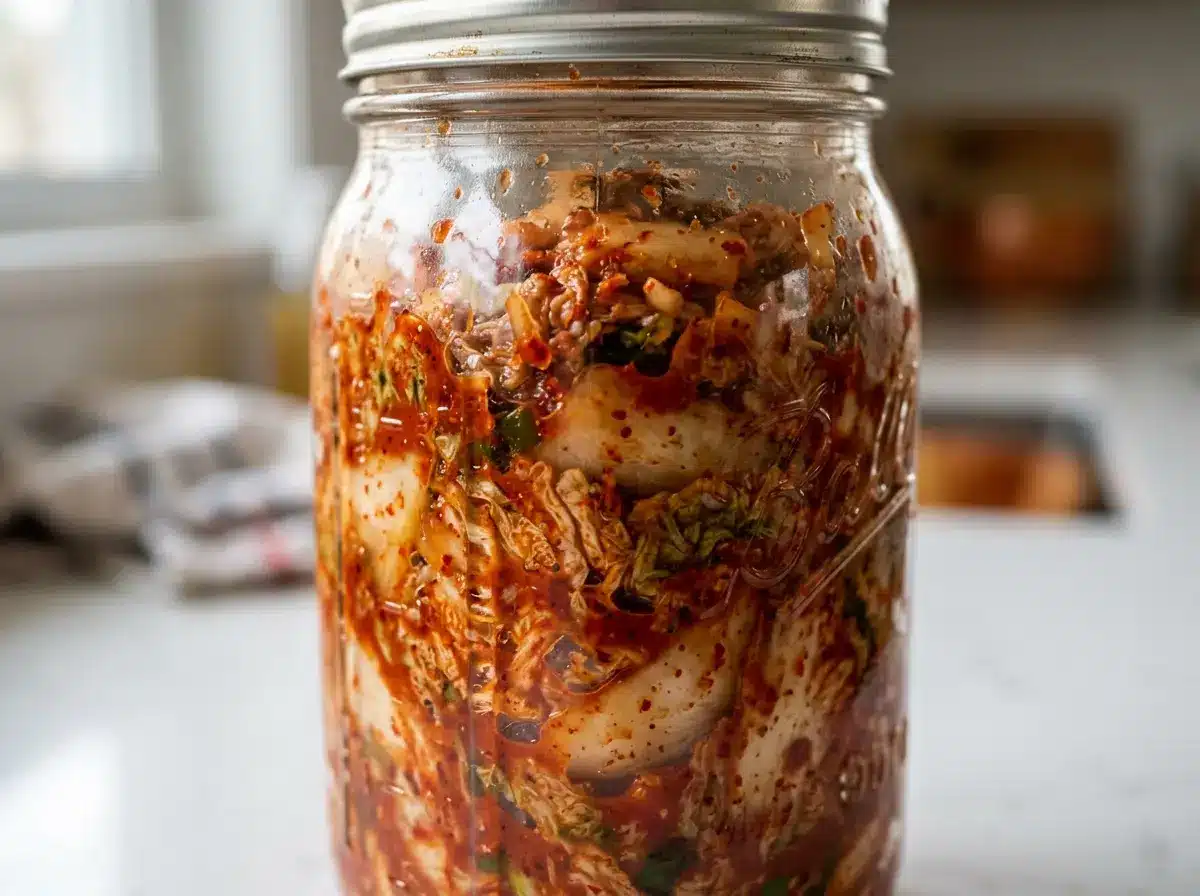
Learning how to make kimchi at home is easier than most people think, and the result beats any store-bought jar by a wide margin. Most commercial kimchi is pasteurized, which kills the live bacteria your gut actually needs. When you make it at home, you get a living fermented food packed with active probiotics, real crunch, and a depth of flavor that no grocery aisle can match. This guide gives you an easy, authentic recipe with step-by-step instructions, a day-by-day fermentation timeline, and five flavor variations ready in three days.
Here at Daily Tonic Plan, fermented foods sit at the center of our gut health approach. Research published in npj Science of Food found that regular kimchi consumption strengthened immune cell function while keeping inflammatory responses balanced, suggesting kimchi does far more than support digestion alone. If you already follow a kefir weight loss protocol, adding homemade kimchi gives your microbiome another layer of diverse probiotic strains.
What You Will Learn
- You will learn the exact ingredients and tools needed to make authentic kimchi at home.
- You will follow a clear six-step process with timing for each stage.
- You will understand how to read fermentation signs so you know when your kimchi is ready.
- You will get a day-by-day fermentation timeline and a troubleshooting guide.
- You will discover five easy kimchi variations including vegan, white, radish, and cucumber.
What Is Kimchi? (And Why You Should Make It at Home)
Kimchi is a traditional Korean fermented vegetable dish, most often made from napa cabbage salted and seasoned with gochugaru (Korean red chili flakes), garlic, ginger, fish sauce, and green onions. The mixture ferments through lacto-fermentation, a natural process where beneficial Lactobacillus bacteria convert sugars into lactic acid. That acid preserves the vegetables, creates the distinctive sour tang, and populates the final product with live probiotics.
Homemade kimchi differs from store-bought in one critical way: it is alive. Commercial kimchi is often heat-treated or pasteurized to extend shelf life, which destroys the probiotic bacteria. When you make it at home, you control the salt level, spice heat, fermentation time, and ingredients, and you keep all the live cultures intact.
Health Benefits of Fermented Kimchi
A 2024 systematic review and meta-analysis published in Nutrition Reviews found that fermented kimchi consumption was linked to significant reductions in fasting blood glucose, triglycerides, systolic blood pressure, and diastolic blood pressure across five clinical intervention studies involving 205 participants. Prospective cohort data from 42,455 participants also linked higher kimchi intake with lower rates of cancer and metabolic syndrome. These results are promising, though researchers note the evidence base is still growing.
A 2025 clinical study using single-cell genetic analysis confirmed that eating kimchi daily for 12 weeks improved the function of antigen-presenting immune cells, which detect bacteria and viruses and signal other immune cells. The researchers described kimchi as a “precision regulator” that boosts immune defenses when needed while suppressing unnecessary inflammatory responses. These immune benefits are separate from the gut microbiome benefits already well documented in the literature. For a broader look at fermented food science, the PMC review on effects of kimchi on human health is a strong starting point.
Print
How to Make Kimchi at Home: Easy Authentic Recipe (Step-by-Step)
Learn how to make kimchi at home with this easy, authentic recipe. Step-by-step guide with fermentation tips and 5 flavor variations. Ready in 3 days!
- Total Time: 3 days
- Yield: 1 quart jar
Ingredients
1 medium napa cabbage, about 2 lbs
1/4 cup iodine-free sea salt or kosher salt
1 tablespoon sweet rice flour
1/2 cup water
1/4 cup gochugaru (Korean red chili flakes)
6 cloves garlic, minced
1 teaspoon fresh ginger, grated
2 tablespoons fish sauce or soy sauce for vegan
1 teaspoon sugar or 2 tablespoons grated Asian pear
4 green onions, cut into 1-inch pieces
Optional: 1 cup julienned Korean radish or daikon
Instructions
1. Cut napa cabbage into quarters then into 2-inch pieces. Toss with sea salt, massage for 2 minutes, and let sit for 1 to 2 hours until limp. Rinse 2 to 3 times under cold water and squeeze dry.
2. Whisk sweet rice flour and water in a saucepan over medium heat, stirring until thick and smooth, about 3 to 5 minutes. Cool to room temperature.
3. Combine cooled rice porridge, minced garlic, grated ginger, fish sauce, and sugar. Stir until smooth.
4. Add gochugaru to the aromatic base and stir until fully combined into a thick red paste.
5. Wearing gloves, add green onions and optional add-ins to the cabbage bowl. Spoon the paste over the top and massage into every leaf until uniformly coated.
6. Pack tightly into clean mason jars, pressing down until brine rises. Leave 1 inch of headspace. Seal loosely and ferment at room temperature for 1 to 5 days. Taste daily. When sour enough for your taste, seal tightly and refrigerate.
Notes
Use iodine-free sea salt or kosher salt only. Iodized salt inhibits fermentation.
Fermentation time: 1 day for fresh and crunchy, 3 days for balanced tang, 5+ days for deep sour flavor.
For vegan kimchi, replace fish sauce with soy sauce or tamari at a 1:1 ratio.
Kimchi keeps in the refrigerator for 3 to 6 months. Press vegetables under brine before resealing.
See our guide to fermented rice water and morning tonic benefits for more fermented food ideas.
- Prep Time: 50 minutes
- Cook Time: 5 minutes
- Category: Fermented & Gut Health
- Method: Fermentation
- Cuisine: Korean, Wellness
- Diet: Low Calorie
Nutrition
- Serving Size: 2 tablespoons
- Calories: 10
- Sugar: 1g
- Sodium: 210mg
- Fat: 0g
- Saturated Fat: 0g
- Unsaturated Fat: 0g
- Trans Fat: 0g
- Carbohydrates: 2g
- Fiber: 1g
- Protein: 1g
- Cholesterol: 0mg
Keywords: how to make kimchi at home, homemade kimchi recipe, easy kimchi recipe, authentic kimchi recipe, kimchi recipe for beginners, how to make kimchi without fish sauce, how to make kimchi in a mason jar, vegan kimchi, kimchi fermentation, gut health fermented food
Store-Bought vs. Homemade: What’s the Difference?
| Factor | Store-Bought | Homemade |
|---|---|---|
| Live probiotics | Often destroyed by pasteurization | Active and abundant |
| Sodium level | Often very high, hard to control | Fully adjustable |
| Spice level | Fixed by manufacturer | Mild to very spicy, your choice |
| Vegan option | Hard to confirm fish sauce absence | Easy to make fully vegan |
| Cost per batch | Higher per serving | Lower, especially in bulk |
| Fermentation stage | Pre-set by producer | Fresh, young, or well-fermented |
Ingredients You’ll Need to Make Kimchi
Essential Ingredients
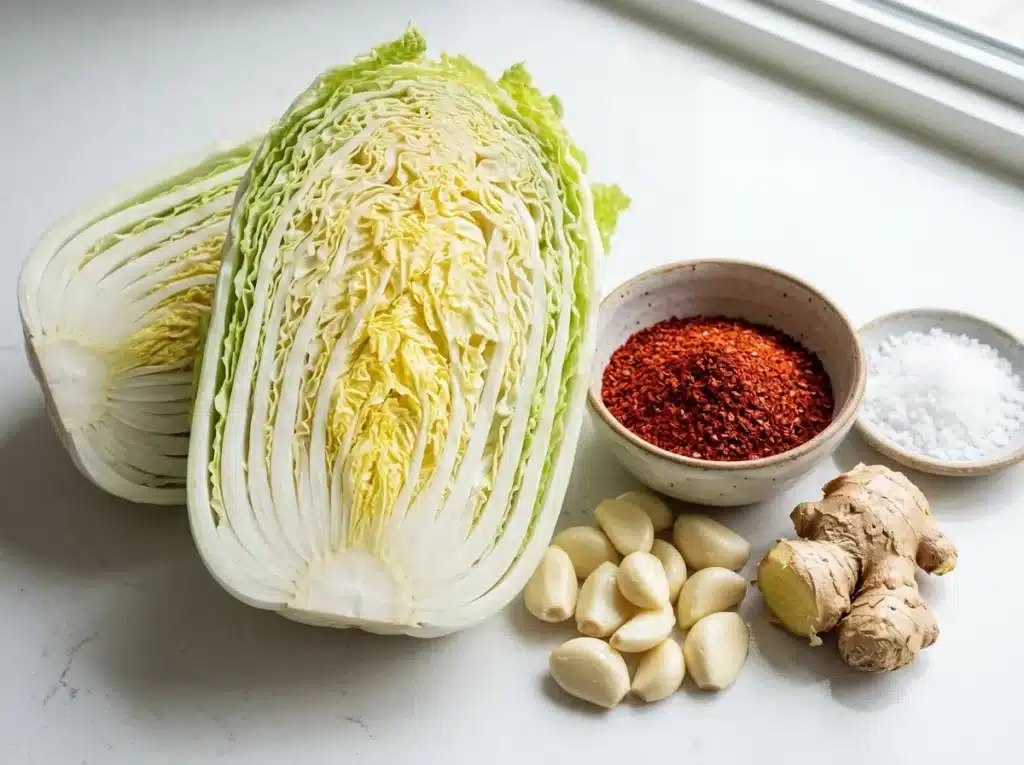
- 1 medium napa cabbage (about 2 lbs) — the base of traditional kimchi. Look for firm, pale-green heads with tightly packed leaves.
- 1/4 cup iodine-free sea salt or kosher salt — iodine in regular table salt can inhibit fermentation bacteria. Use sea salt or kosher salt only.
- 1/4 cup gochugaru (Korean red chili flakes) — this gives kimchi its signature color, mild heat, and fruity pepper flavor. Do not substitute regular chili powder as the taste and texture differ significantly.
- 6 cloves garlic, minced — use fresh garlic. Pre-minced jarred garlic often contains preservatives that slow fermentation.
- 1 teaspoon fresh ginger, grated — adds warmth and supports the fermentation environment.
- 2 tablespoons fish sauce — or soy sauce for a vegan version. Fish sauce adds umami depth and feeds the fermentation process.
- 1 teaspoon sugar or Asian pear puree — feeds the bacteria and balances the heat.
- 4 green onions, cut into 1-inch pieces — adds crunch and mild onion flavor.
For official guidance on safe lacto-fermentation and salt ratios, see the University of Georgia science-based guide to safe fermentation.
Optional Add-Ins for Extra Flavor
- Korean radish or daikon — julienned into thin matchsticks. Adds crunch and a mild, peppery bite.
- Carrots — julienned, for color and natural sweetness.
- Asian pear or apple — grated into the paste for natural sweetness that replaces sugar.
- Fermented shrimp paste (saeujeot) — adds deep umami and authentic Korean flavor. One teaspoon goes a long way.
Where to Find Gochugaru
Gochugaru is available at most Korean or Asian grocery stores. If you cannot find it locally, look for it online. In a pinch, a mix of mild paprika and a small amount of cayenne pepper can approximate the color and heat, though the flavor will not be identical.
Equipment Needed
Must-Have Tools
- Large mixing bowl (at least 5-quart capacity)
- Sharp knife and cutting board
- Clean glass mason jars with lids (quart-size or half-gallon)
- Latex or nitrile gloves (gochugaru stains skin and is hard to remove)
- Measuring cups and spoons
Nice-to-Have
- Fermentation weights or a small zip-lock bag filled with brine — keeps kimchi submerged under the liquid during fermentation.
- Wide-mouth funnel — makes packing jars cleaner and faster.
- Box grater — for ginger and Asian pear.
How to Make Kimchi at Home: Step-by-Step
Step 1: Salt the Cabbage (1.5 to 2 hours)
Cut the napa cabbage lengthwise into quarters, then cut each quarter crosswise into 2-inch pieces. Place in a large bowl and sprinkle evenly with the sea salt. Use your hands to massage the salt into the leaves for about 2 minutes until they start to soften. Let the salted cabbage sit at room temperature for 1 to 2 hours, tossing occasionally. The salt draws out water through osmosis, softens the texture, and creates the brine environment that fermentation needs. By the end, the cabbage should be limp and the bowl should have a pool of liquid at the bottom.
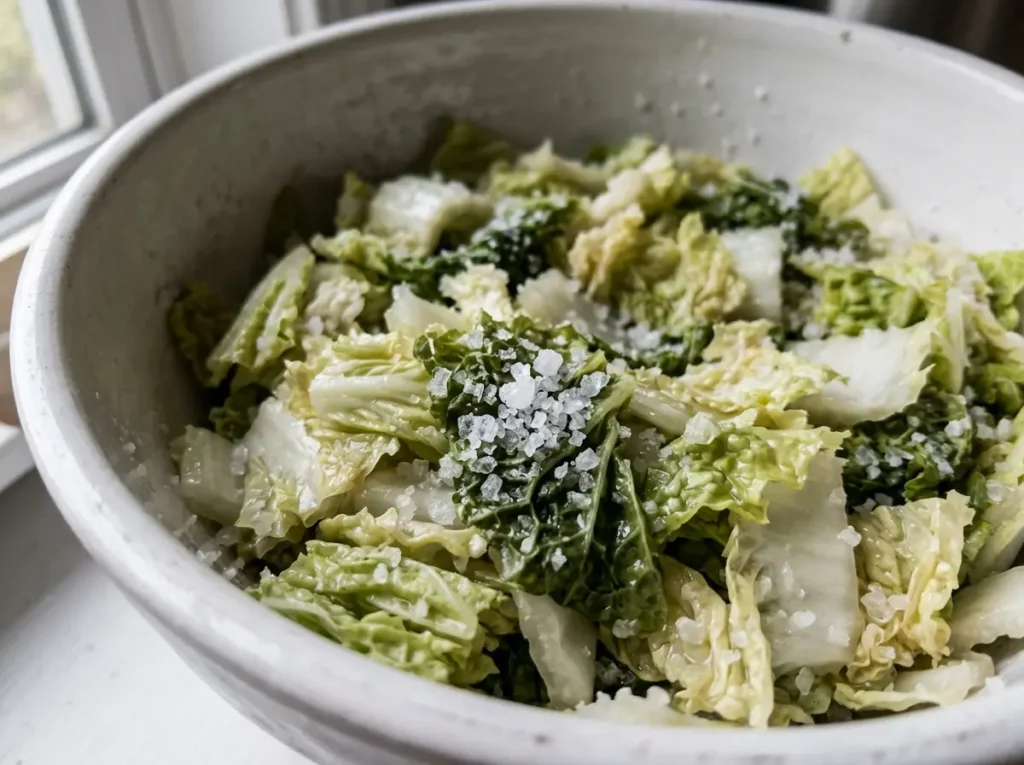
Rinse the cabbage thoroughly under cold water two to three times to remove excess salt. Taste a piece. It should be lightly salty but not overwhelming. Squeeze out as much water as you can with your hands and set aside in the bowl.
Step 2: Make the Rice Porridge (10 minutes)
In a small saucepan, whisk together 1/2 cup water and 1 tablespoon sweet rice flour (also called glutinous rice flour). Cook over medium heat, stirring constantly, until the mixture thickens into a smooth, sticky paste, about 3 to 5 minutes. Remove from heat and let it cool to room temperature. This porridge acts as a binder that helps the kimchi paste cling to every leaf. It also feeds the bacteria during fermentation. If you cannot find rice flour, you can skip this step, but the paste will be slightly less cohesive.
Step 3: Blend the Aromatics (5 minutes)
Combine the minced garlic, grated ginger, fish sauce, sugar, and cooled rice porridge in a bowl. Stir until smooth. This aromatic base is the flavor foundation of the kimchi paste. The garlic and ginger add spice and antimicrobial balance, while the fish sauce adds umami depth and helps the fermentation bacteria thrive. For a vegan version, replace fish sauce with soy sauce or tamari at the same ratio.
Step 4: Mix the Kimchi Paste (10 minutes)
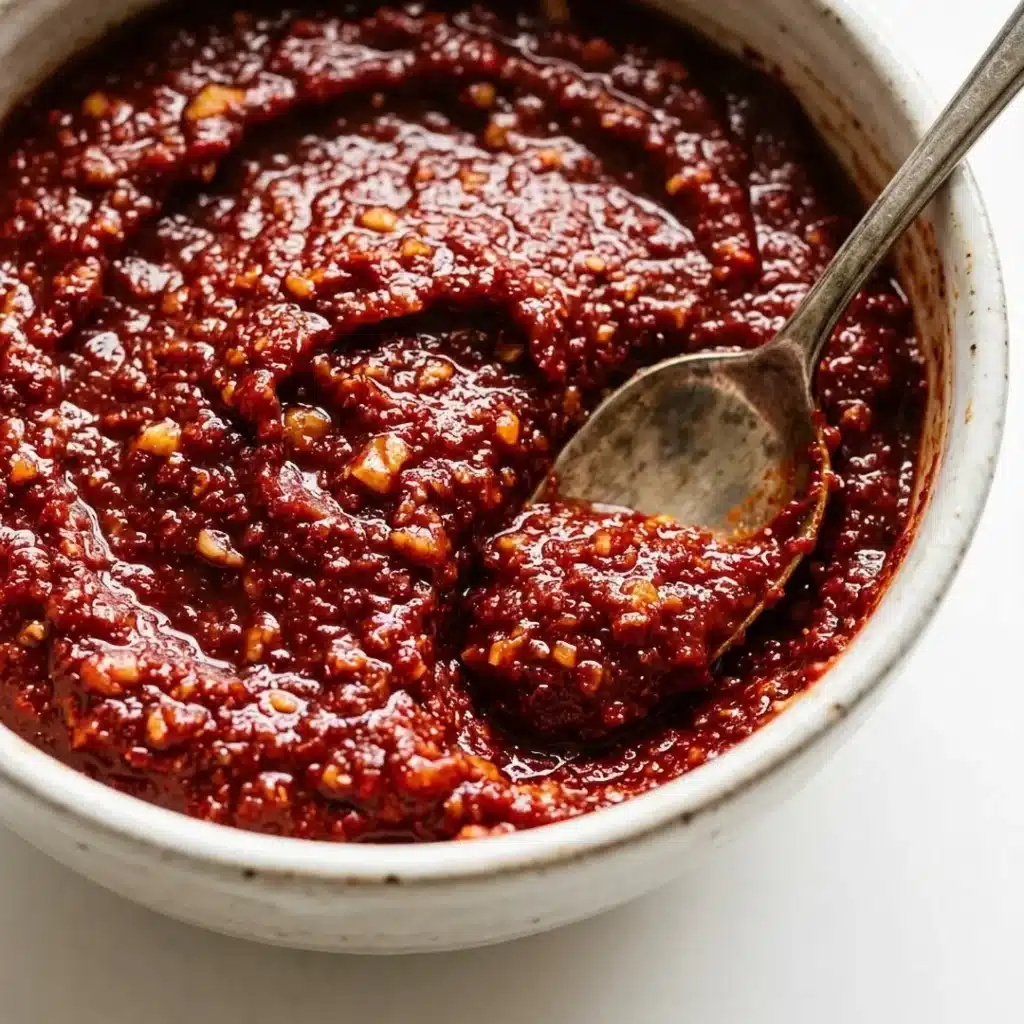
Add the gochugaru to the aromatic base and stir well until fully combined. The paste should be deeply red, slightly sticky, and fragrant. Adjust the amount of gochugaru based on your heat preference. Use 2 tablespoons for mild kimchi, 1/4 cup for medium, and up to 1/3 cup for a spicier result. At this point you can also stir in any optional add-ins like julienned radish or carrot.
Step 5: Massage Paste Into Cabbage (15 minutes)
Put on your gloves. Add the green onions and any add-ins to the bowl with the rinsed cabbage. Spoon the kimchi paste over the top. Using your hands, massage the paste into every piece of cabbage, coating the leaves thoroughly from the base to the tips. Work in sections to make sure no piece is left bare. The mixture should look uniformly red and glossy. This step is where the flavor gets built into the vegetables, so take your time.

Step 6: Pack and Ferment (1 to 5 days)
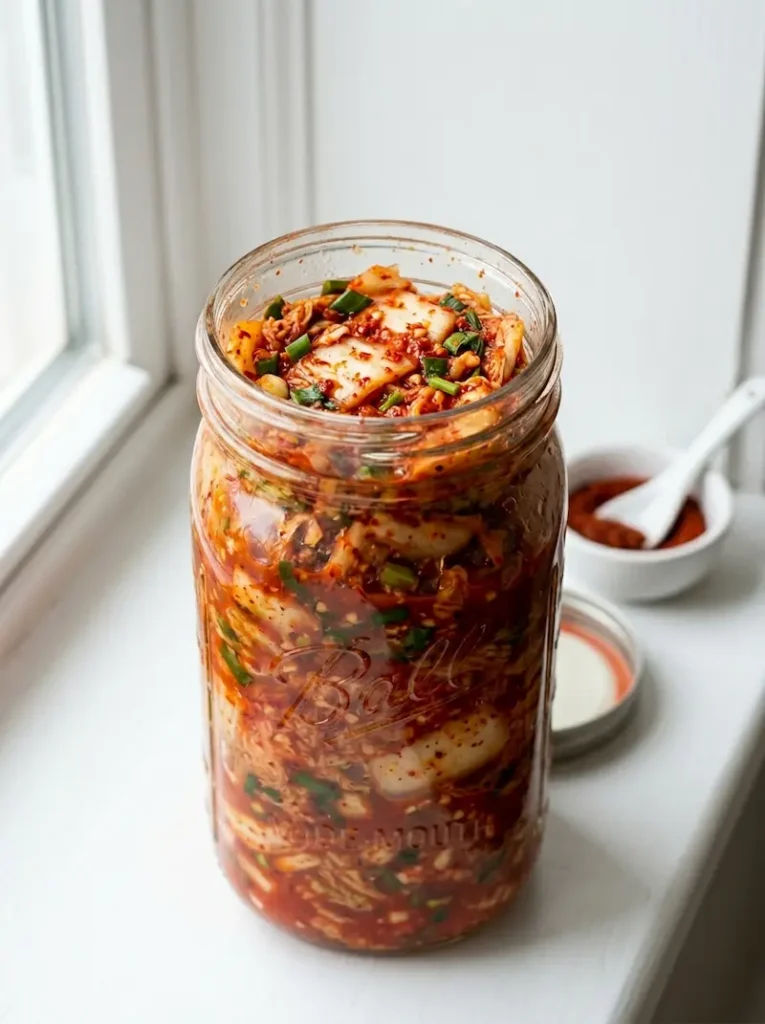
Pack the kimchi tightly into clean glass mason jars, pressing down firmly with each addition so the brine rises up to cover the vegetables. Leave about 1 inch of headspace at the top because kimchi expands as it ferments. Seal the jars loosely, not airtight, because the fermentation process produces carbon dioxide gas that needs to escape. Place the jars on a small plate or tray to catch any overflow brine.
Leave the jars at room temperature (65 to 75°F) for 1 to 5 days. In a warmer kitchen, fermentation moves faster. In cooler conditions, it takes longer. Taste daily starting at day one to find your preferred level of tanginess. When the kimchi reaches your desired sourness, seal the jars and move them to the refrigerator where fermentation slows dramatically.
How to Tell When Your Kimchi Is Ready
Day-by-Day Fermentation Timeline
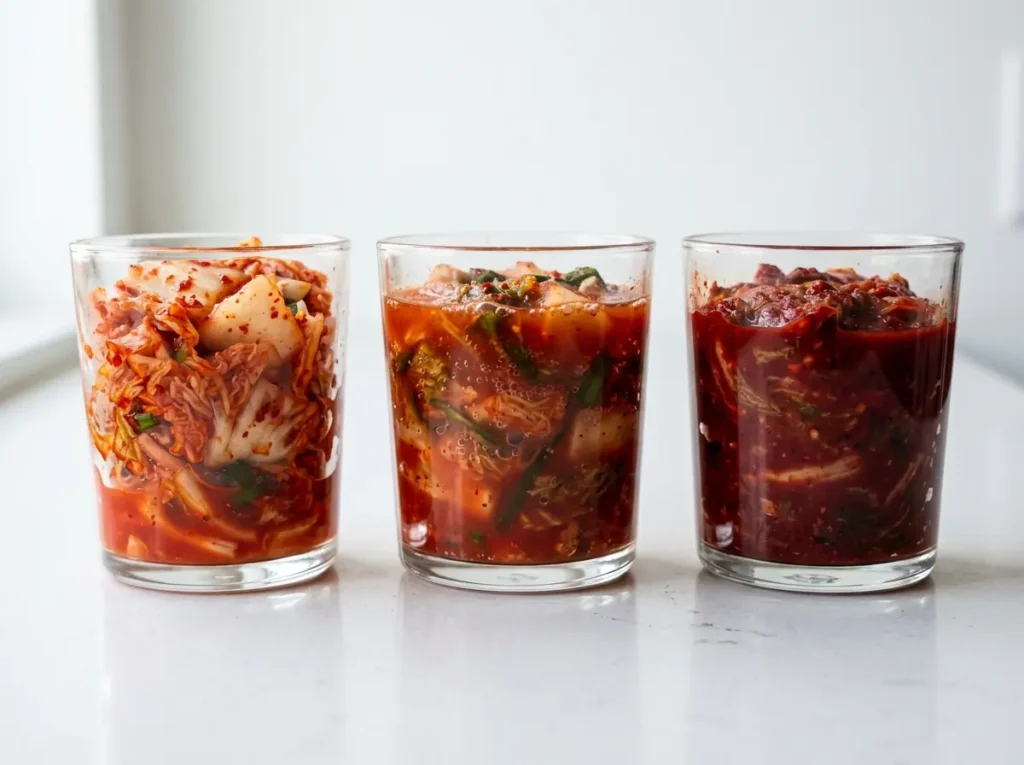
| Day | What to Expect | Taste Profile |
|---|---|---|
| Day 0 (fresh) | Bright red, crunchy, barely any brine | Spicy, garlicky, raw |
| Day 1 | Brine developing, slight bubble at jar lid | Slightly less sharp, starting to mellow |
| Day 2 | Bubbles visible when pressed, brine full | Lightly sour, more complex |
| Day 3 | Tangy smell, active fermentation | Pleasantly sour, balanced heat |
| Day 5+ | Strong sour aroma, softer texture | Deeply sour, best for kimchi jjigae |
Signs of Proper Fermentation
- Tiny bubbles form when you press down on the kimchi in the jar.
- A pleasantly sour, tangy smell develops (similar to sauerkraut but spicier).
- The brine becomes cloudy, which is normal and indicates active bacterial activity.
- The lid may bulge slightly from carbon dioxide. This is safe. Just open briefly to release pressure.
What If My Kimchi Is Too Salty?
If the kimchi tastes overly salty after the initial rinse, rinse the cabbage one more time under cold water and squeeze firmly. You can also add a small amount of grated Asian pear or apple to the paste to balance the salt with natural sweetness. Once packed in jars, fermentation naturally mellows saltiness over time as the bacteria consume the sugars and the flavor integrates. A batch that tastes too salty on day one often becomes well-balanced by day three.
5 Easy Kimchi Variations to Try Next
Vegan Kimchi (No Fish Sauce)
Replace fish sauce with soy sauce or tamari at a 1:1 ratio. Add one extra teaspoon of fermented miso paste for depth. This version has slightly less umami than the traditional recipe but is fully vegan, gluten-free if using tamari, and ferments just as reliably. Many Korean home cooks also use kelp-based broth as a flavor booster in vegan kimchi.
Quick Mak Kimchi (Bite-Sized, No Whole Leaves)
Mak kimchi uses the same paste and ingredients as traditional kimchi, but the cabbage is cut into 2-inch square pieces before salting. This makes it faster to prepare and easier to pack into jars. It is also easier to serve and eat straight from the jar without cutting. Fermentation time and storage are identical to traditional kimchi.
White Kimchi (Baek Kimchi, No Chili)
White kimchi skips the gochugaru entirely. The paste uses garlic, ginger, fish sauce, and a small amount of Asian pear puree for sweetness, plus julienned radish and thin carrot slices for color. The result is mild, slightly sweet, slightly tangy, and beautiful. It is ideal for people who are sensitive to spice or for serving alongside spicy main dishes as a palate cleanser.
Radish Kimchi (Kkakdugi)
Dice Korean radish (or daikon) into 3/4-inch cubes and salt for 30 minutes instead of the longer cabbage salting time. Rinse, squeeze, and coat with the same gochugaru paste. Pack into jars and ferment for 1 to 3 days. Kkakdugi has a satisfying crunch and a slightly more peppery bite than cabbage kimchi. It pairs particularly well with light soups and bone broth.
Cucumber Kimchi (Oi Sobagi)
Cut Korean cucumbers or small Persian cucumbers into 2-inch sections, then cut an X most of the way through each section without separating the quarters. Stuff the cut cucumber pockets with a kimchi paste mixed with extra green onions and garlic chives. Salt the cucumbers for just 20 minutes before stuffing. This version ferments quickly, often in under 24 hours, and is best eaten fresh and crunchy rather than aged.
For more fermented food inspiration, see our guide on fermented cassava porridge and our beet kvass for estrogen balance.
How to Store Homemade Kimchi
Refrigerator Storage
Once your kimchi reaches the sourness level you enjoy, seal the jars tightly and transfer to the refrigerator. Cold temperatures slow fermentation dramatically without stopping it completely. Kimchi stored in the refrigerator keeps well for 3 to 6 months and continues to develop flavor slowly over time. Press the kimchi down with a clean spoon before each use to keep the vegetables submerged under the brine. This prevents surface oxidation and keeps the probiotics active.
Room Temperature Fermentation
Room temperature fermentation (65 to 75°F) is only for the initial active fermentation period of 1 to 5 days. After that, refrigerate. Never leave kimchi at room temperature indefinitely. In warmer kitchens (above 80°F), fermentation can become too aggressive and the kimchi may over-sour within 24 hours. In those conditions, move the jars to the refrigerator after just 12 to 24 hours and let it continue fermenting slowly in the cold.
Signs Your Kimchi Has Gone Bad
- Pink, gray, black, or fuzzy mold growing on the surface (not just cloudy brine, which is normal).
- Unusually foul smell that is rotten rather than sour and tangy.
- Slimy texture on the vegetables rather than crisp or slightly softened.
If all vegetables remain submerged under brine and no mold is present, the kimchi is safe. The University of Georgia fermentation safety guide confirms that proper salt concentration and keeping vegetables submerged are the two most important safety factors in homemade kimchi.
Delicious Ways to Use Your Homemade Kimchi
Kimchi Fried Rice
Heat a skillet over high heat with a small amount of sesame oil. Add day-old rice, a handful of chopped well-fermented kimchi, and a splash of the kimchi brine. Stir-fry for 3 to 4 minutes until the rice is lightly toasted. Top with a fried egg and a drizzle of gochujang. The brine acts as a natural seasoning so no extra salt is needed. This is one of the fastest ways to use older, very sour kimchi.
Kimchi Stew (Kimchi Jjigae)
Kimchi jjigae is a deeply satisfying stew made with well-fermented kimchi, tofu, pork belly or canned tuna, and a simple anchovy broth. The older and more sour the kimchi, the richer the stew flavor. Simmer everything together for 20 minutes until the tofu absorbs the red broth and the kimchi melts into the base. Serve with steamed rice. This dish pairs well with our nourishing gut-healing vegetable soup on the side.
Kimchi Pancakes (Kimchijeon)
Mix 1 cup chopped kimchi with 1/2 cup all-purpose flour, 1/2 cup water, 1 egg, and a pinch of salt to make a thick batter. Pan-fry in a lightly oiled skillet over medium-high heat until crispy on both sides, about 3 minutes per side. Serve with a simple dipping sauce of soy sauce, rice vinegar, and a pinch of sesame seeds. The batter absorbs the kimchi flavor and crisps beautifully at high heat.
Straight From the Jar
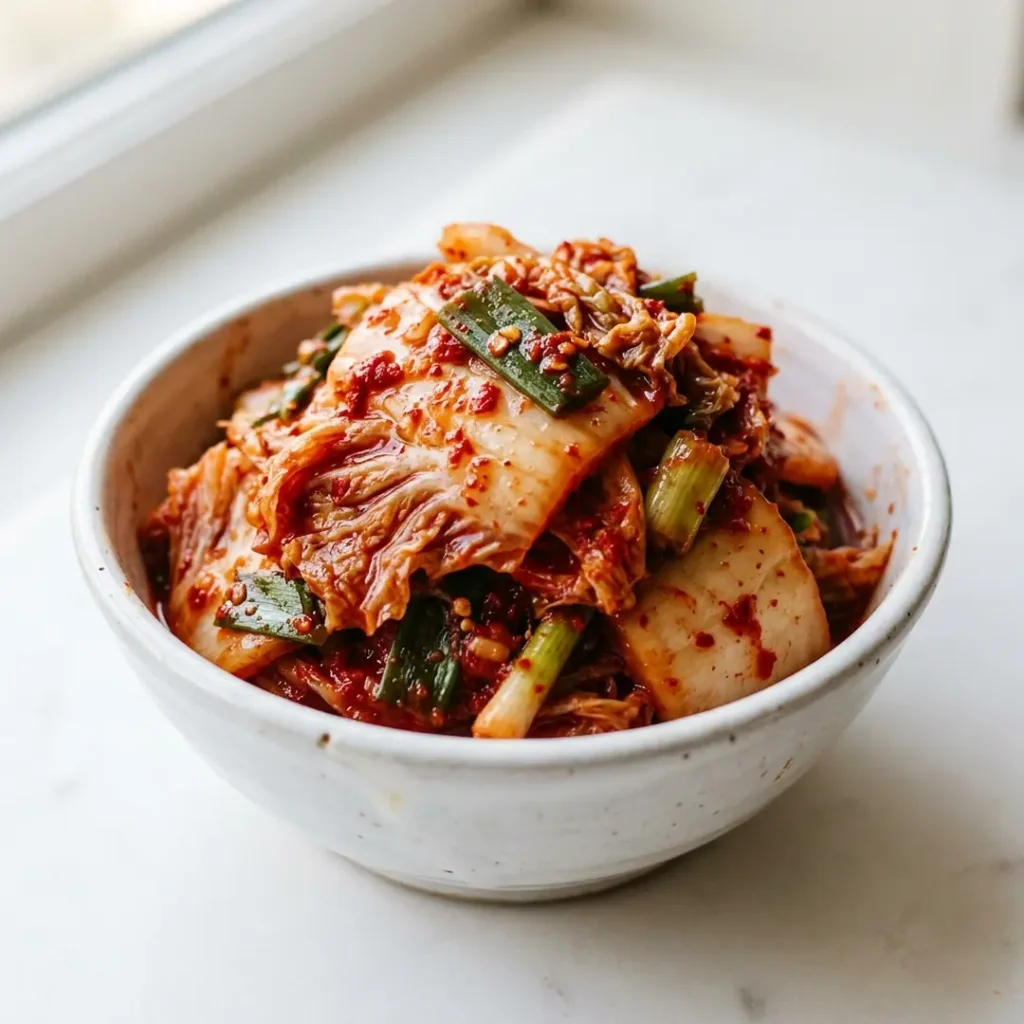
Kimchi served straight from the jar alongside rice, soup, or any Korean-inspired meal is called banchan, a traditional side dish that appears on most Korean tables with every meal. Fresh kimchi has crunch and bright heat. Aged kimchi has depth and complexity. Both are equally valid and nutritious ways to enjoy the probiotic benefits of your homemade batch.
For more gut-supporting daily rituals, explore our Dr. Taz Bhatia gut tonic and our guide to the health benefits of kimchi.
Frequently Asked Questions
How long does it take to make kimchi at home?
Active hands-on preparation takes about 40 to 50 minutes including salting, rinsing, making the paste, and packing the jars. You also need 1 to 2 hours for the cabbage to salt passively. After packing, kimchi ferments at room temperature for 1 to 5 days before moving to the refrigerator. Many people start tasting from day two and refrigerate on day three.
How long do you cook chicken breast in an air fryer for dinner?
This is an air fryer question, not a kimchi question. For kimchi fermentation timing specifically: leave your packed jars at room temperature for 1 to 5 days depending on your heat level and sourness preference, then refrigerate. Warmer kitchens ferment faster, cooler kitchens take longer. Taste daily starting at day one.
How to make kimchi without fish sauce?
Replace fish sauce with an equal amount of soy sauce or tamari for a vegan kimchi. For added umami depth, mix in one teaspoon of white miso paste or a small piece of dried kelp simmered in the rice porridge water. The fermentation process works identically, and the result is a fully plant-based, probiotic-rich kimchi with a slightly different but equally satisfying flavor profile.
How to make kimchi in a mason jar?
Pack the finished kimchi paste-coated vegetables tightly into clean quart-size or half-gallon mason jars, pressing down firmly after each addition. Leave 1 inch of headspace at the top for expansion. Seal the lid loosely to allow carbon dioxide to escape. Place the jar on a small plate to catch overflow brine. Ferment at room temperature for 1 to 5 days, then refrigerate.
Can I use regular green cabbage instead of napa cabbage?
Yes, regular green cabbage works as a substitute and creates a denser, crunchier kimchi. The fermentation process is identical, though the texture and flavor differ from traditional napa cabbage kimchi. Cut into similar 2-inch pieces, salt for the same 1 to 2 hours, rinse, and follow the recipe exactly. Many beginner cooks use regular cabbage successfully when napa is unavailable.
How to make kimchi less spicy?
Reduce the gochugaru to 1 to 2 tablespoons instead of the standard 1/4 cup. You can also replace half the gochugaru with sweet paprika to keep the red color while dropping the heat. White kimchi (baek kimchi) uses no gochugaru at all and is fully mild. The fermentation process and all other ingredients remain the same regardless of spice level.
How to make kimchi more sour?
Leave the kimchi at room temperature for longer before refrigerating, up to 4 to 5 days in a cooler kitchen. You can also bring jars out of the refrigerator for a day at room temperature to restart active fermentation. Well-fermented, sour kimchi is called mukeunji and is traditionally used in kimchi stew and kimchi fried rice for a richer, deeper flavor.
How do I know my kimchi is fermenting correctly?
Correct fermentation shows small bubbles when you press the vegetables down in the jar, a pleasantly sour and tangy smell similar to sauerkraut, and cloudy brine (not clear). The lid may build slight pressure from carbon dioxide. Open the jar briefly once a day to release gas and press the vegetables down under the brine. These are all signs of healthy lacto-fermentation activity.
Can I eat kimchi the same day I make it?
Yes. Freshly made, unfermented kimchi is called geotjeori and is eaten as a fresh salad-style dish. It is spicy, garlicky, crunchy, and flavorful without any sourness. It does not contain active probiotics yet since fermentation has not started, but it is perfectly safe and delicious to eat immediately after making. Many Korean cooks serve geotjeori alongside fermented kimchi at the same meal.
Is homemade kimchi safe to eat?
Yes. Homemade kimchi is safe when made with the correct salt concentration and kept submerged under brine. The lactic acid produced during fermentation naturally prevents the growth of harmful bacteria. The University of Georgia fermentation safety guide confirms that salt and submersion are the two key safety factors. No special equipment or canning process is required. Trust the brine.
How long does homemade kimchi last in the refrigerator?
Properly made and stored kimchi keeps in the refrigerator for 3 to 6 months. It continues to ferment slowly and becomes more sour over time, which is desirable for cooking purposes. Always use a clean spoon and keep the vegetables pressed under the brine before resealing. Kimchi does not expire in the traditional sense as long as no mold is visible and the smell is sour rather than rotten.
What is the best salt for making kimchi?
Use iodine-free sea salt or kosher salt only. Iodized table salt contains iodine, which is antimicrobial and can inhibit or slow down the beneficial fermentation bacteria. Sea salt and kosher salt do not contain iodine and allow the lacto-fermentation process to proceed naturally. Korean coarse sea salt (cheonilyeom) is the traditional choice and creates the most authentic texture and flavor.
Can I make kimchi with gochujang instead of gochugaru?
Gochujang is a fermented chili paste with sugar, soybean paste, and glutinous rice already added. It creates a thicker, sweeter paste and a different flavor profile from traditional kimchi. You can use it in a pinch but reduce any added sugar in the recipe and expect a noticeably different result. Gochugaru flakes are strongly preferred for authentic kimchi flavor and texture.
Does kimchi have probiotics after refrigeration?
Yes. Refrigeration slows fermentation but does not kill the live bacteria. The probiotics in kimchi, primarily Lactobacillus species, remain active at refrigerator temperatures and continue to provide probiotic benefits when eaten. Research shows homemade fermented kimchi is rich in diverse microbial communities that survive refrigeration and contribute to gut microbiome diversity.
How to make kimchi for weight loss?
A 2024 meta-analysis found that fermented kimchi consumption was associated with reduced fasting blood glucose, lower triglycerides, and improved blood pressure in clinical trials. Regular kimchi intake as part of a balanced diet supports the gut microbiome, which is increasingly linked to metabolic health and healthy body weight. Eat two to four tablespoons daily alongside regular meals rather than as a standalone weight loss remedy.
Conclusion
Making kimchi at home takes about 50 minutes of active work and a few days of patient fermentation, and the result is a probiotic-rich, living food that no store-bought jar can replicate. You control the salt, the spice, the sourness, and the ingredients. You keep the live bacteria intact. You also build a skill that scales easily into five or more variations once you know the core method.
Research continues to confirm what Korean food culture has known for centuries: fermented kimchi supports gut health, immune function, and metabolic markers in clinically meaningful ways. Adding a small serving daily to your routine is one of the simplest, most science-backed dietary habits you can build. For more fermented and gut-supporting rituals, explore our fermented rice water guide and our daily morning tonic benefits plan.
Medical and Nutritional Disclaimer
The content on Daily Tonic Plan is for informational and educational purposes only and does not constitute medical or nutritional advice. The information provided is not intended to diagnose, treat, cure, or prevent any disease or health condition. Always consult a qualified healthcare professional before making significant changes to your diet, especially if you have a medical condition or take medications. Nutritional values are estimates only.